Weak or Stopped Circulation
Reduced return flow, poor surface movement, or circulation that has stopped may involve the pump, filter, valves, accessible plumbing, air entering the system, or more than one connected condition.


Local, Licensed Pool Equipment Repair
Clear Value Pools troubleshoots and repairs pool pumps, filters, heaters and heat pumps, automation and controls, salt systems, valves, exposed plumbing leaks, and circulation equipment under the company’s Arizona contractor license. We inspect the equipment as a connected system so the recommendation addresses the cause—not just the first symptom.
Customers in Scottsdale, Paradise Valley, Fountain Hills, Tempe, Gilbert, Chandler, and select Phoenix neighborhoods can call or text our local team directly about weak flow, leaks, unusual noise, heating problems, or controls that stop responding.
Explore All Pool ServicesStart With the Symptoms You Can See or Hear
Pool equipment problems often begin with a visible or noticeable change: weaker flow, a new leak, unusual noise, inconsistent operation, or controls that no longer respond as expected. These symptoms can help narrow the area that deserves attention, but they do not always identify the underlying cause.
Because one equipment problem can affect several others, we check the pump, filter, valves, exposed plumbing, heater, controls, salt system, and circulation together. You get a clearer explanation of what is causing the symptom and what should be repaired first.
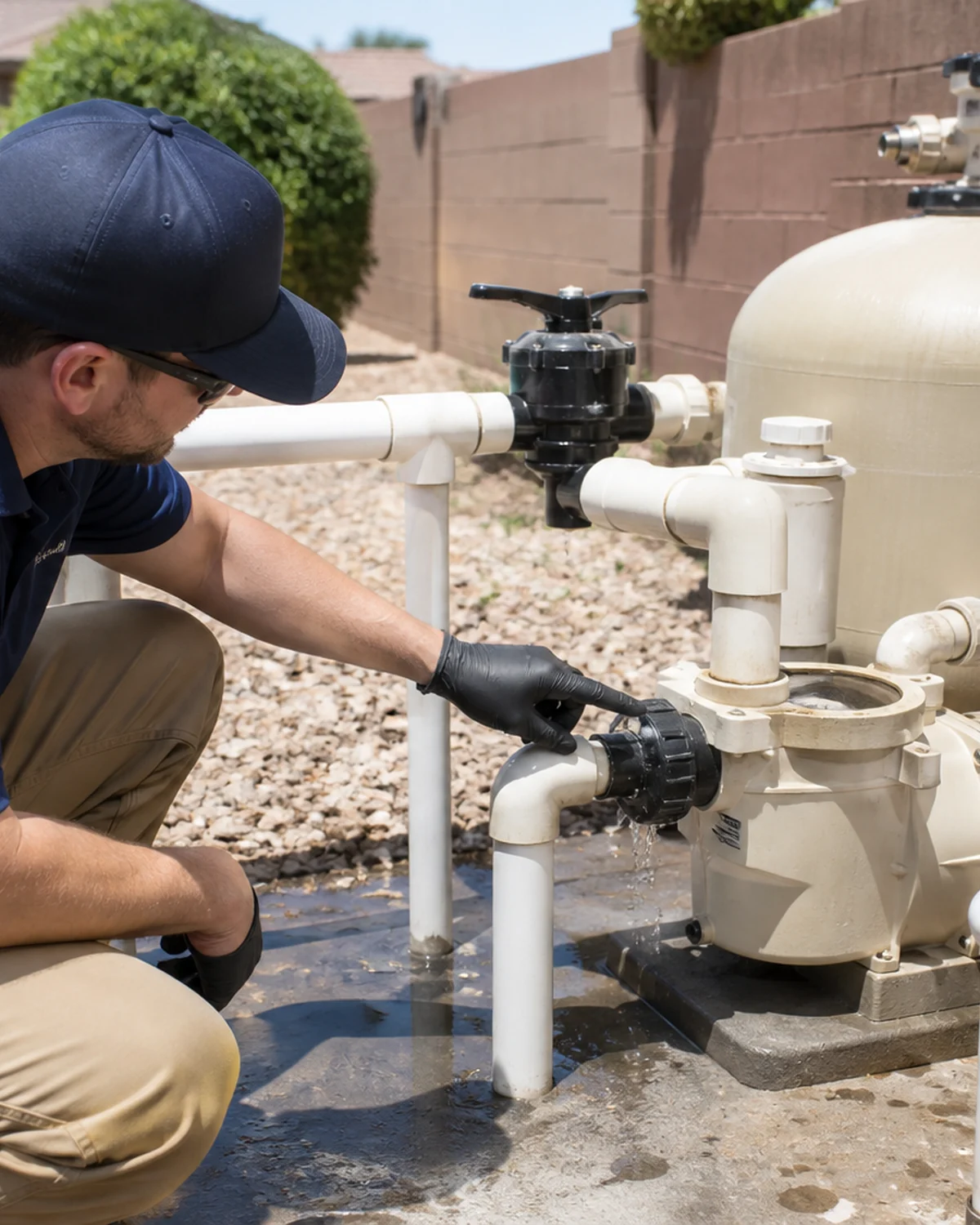
Reduced return flow, poor surface movement, or circulation that has stopped may involve the pump, filter, valves, accessible plumbing, air entering the system, or more than one connected condition.
Water around the equipment pad, pump, filter, valves, or exposed plumbing can point to a worn seal, loose fitting, cracked component, or plumbing leak that should be inspected before it worsens.
Grinding, rattling, humming, or other unfamiliar sounds can signal that a pump, motor, valve, or connected component is not operating normally.
Equipment that starts and stops unexpectedly, loses prime, or works only under certain conditions may require evaluation of the component, controls, circulation, or connected system.
A pool or spa that is not heating consistently may involve the heater, heat pump, controls, water flow, or another condition affecting normal operation.
Schedules that do not run, equipment that does not respond, or inconsistent automation behavior may involve controls, sensors, communication, or the equipment being controlled.
A cleaner that moves slowly, stops, or performs inconsistently may be reacting to weak circulation, valve settings, filter conditions, plumbing, or the cleaner system itself.
The symptom tells us where to start. Checking the connected system helps identify the likely cause, explain what we found, and show you the repair or replacement options before you approve the work.
Focused Pump and Circulation Troubleshooting
The pump drives water through the filter, heater, cleaner, and return lines, so weak flow or a pump that will not stay running may have more than one cause. We inspect the pump along with the valves, filter, exposed plumbing, controls, and signs of air entering the system.
We look at how the pump starts, sounds, primes, holds pressure, and moves water. Then we explain whether the issue appears repairable, needs additional testing, or makes replacement worth considering.
We check humming, overheating, failure to start, reduced output, and other changes that can help isolate a motor, pump, electrical, or circulation problem.
We look for visible air leaks, low water flow, valve issues, lid or seal problems, and exposed plumbing conditions that can keep the pump from holding prime.
We check filter pressure, valve positions, pump performance, and exposed plumbing for restrictions or other conditions reducing circulation.
We listen for grinding, rattling, humming, or sudden shutdowns and compare the sound with the way the pump and connected equipment are operating.
We inspect visible leaks around the pump housing, lid, seals, fittings, valves, and exposed equipment-pad plumbing.
We check whether reduced flow is also affecting filtration, heating, cleaner movement, or other equipment that depends on steady circulation.
A pump symptom is not always a pump-only problem. Checking the full circulation path helps avoid replacing the wrong component or missing another condition that would keep the problem from being solved.
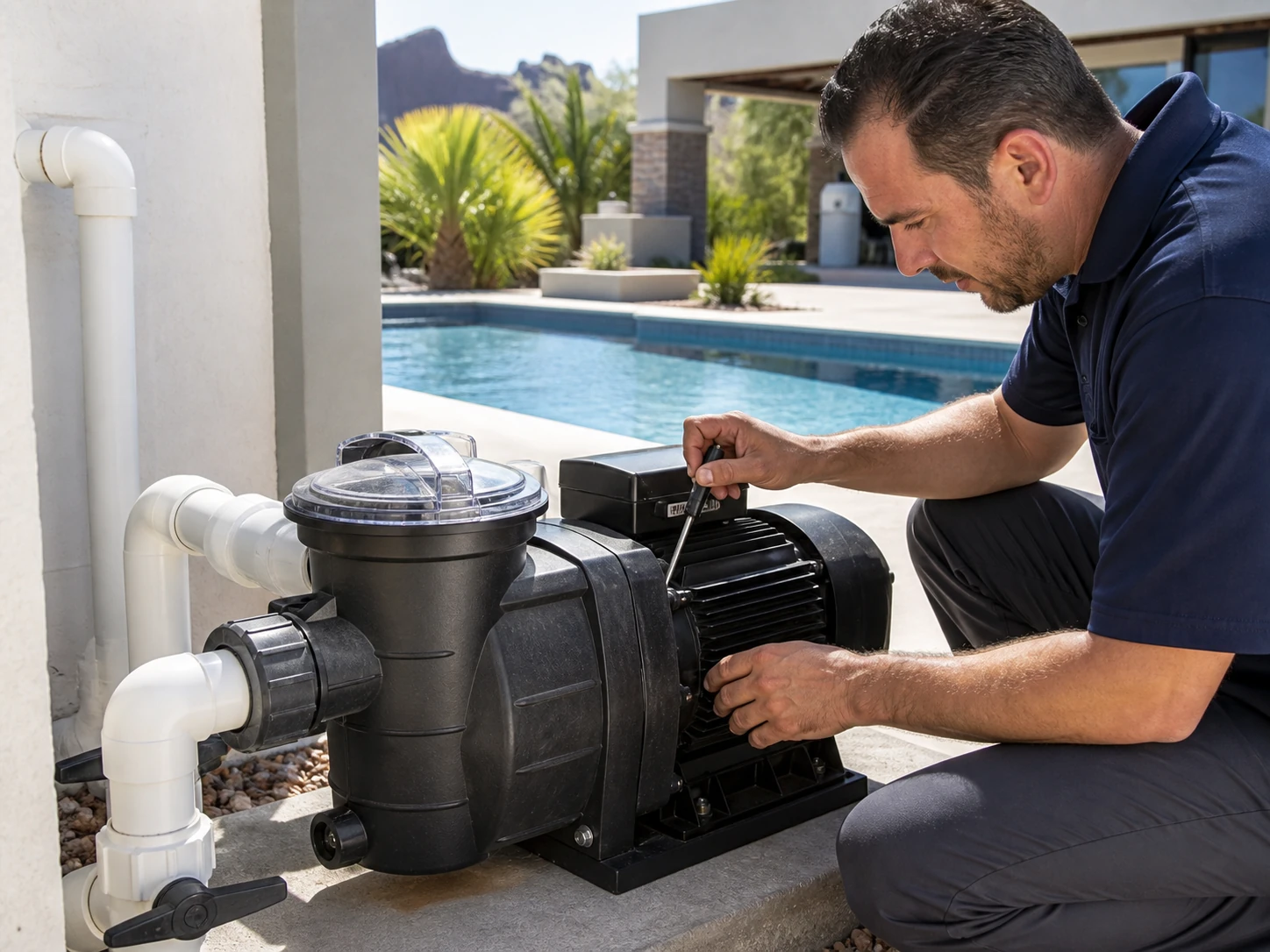
Pumps, Filters, Heaters, Controls, and Circulation
Different symptoms point to different parts of the system, but the equipment still has to work together. We inspect the visible operation, exposed plumbing, controls, and circulation, then explain what appears to need repair, additional testing, or replacement.
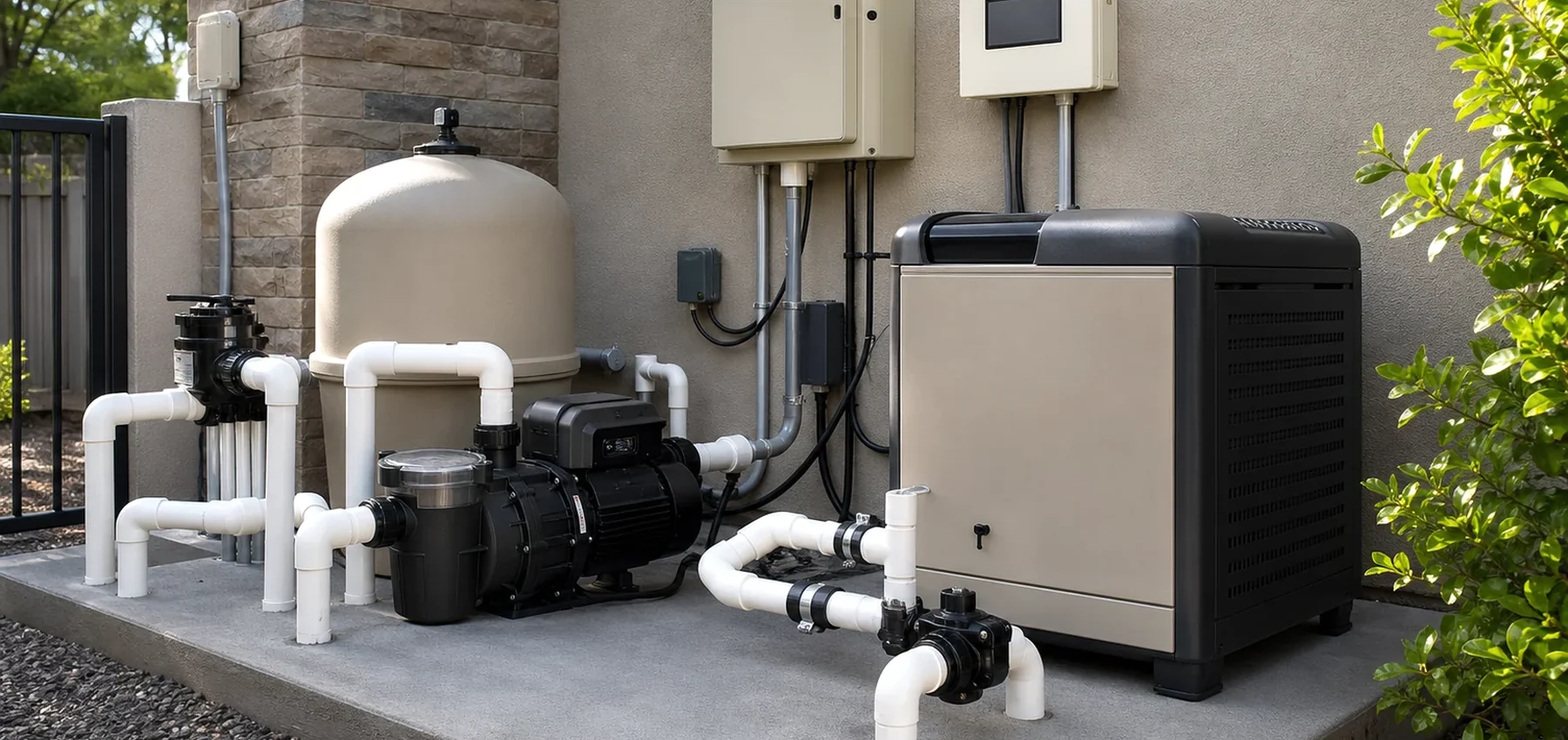
Humming, grinding, overheating, failure to start, loss of prime, weak output, and intermittent operation can come from the pump, motor, electrical supply, air entering the system, or another circulation problem. We compare the symptom with how the system is actually operating.
Leaks, abnormal pressure, weak filtration, damaged components, or recurring cloudy water can point to a filter problem or a circulation issue feeding it. We check the filter condition and how water is moving through the system.
When a heater or heat pump will not start, shuts down, or heats inconsistently, the problem may involve the unit, water flow, controls, or sensors. We check the heating equipment together with the conditions it depends on.
Missed schedules, unresponsive equipment, or commands that work only sometimes can come from the control panel, sensors, communication, wiring, or the equipment receiving the command. We trace the response instead of assuming the panel is automatically at fault.
Low chlorine output, warning lights, or salt-cell errors may be caused by the cell, flow, controls, water conditions, or another connected component. We review the visible system and operating conditions together.
Visible leaks, air entering the system, stiff valves, restricted flow, or inconsistent cleaner performance can involve exposed plumbing, fittings, valves, or circulation equipment. Suspected underground or concealed leaks may need a separate leak-detection service.
After the inspection, we explain what we found, what can be repaired, what may need replacement, and whether parts or follow-up testing are needed. You review the recommendation before work begins.
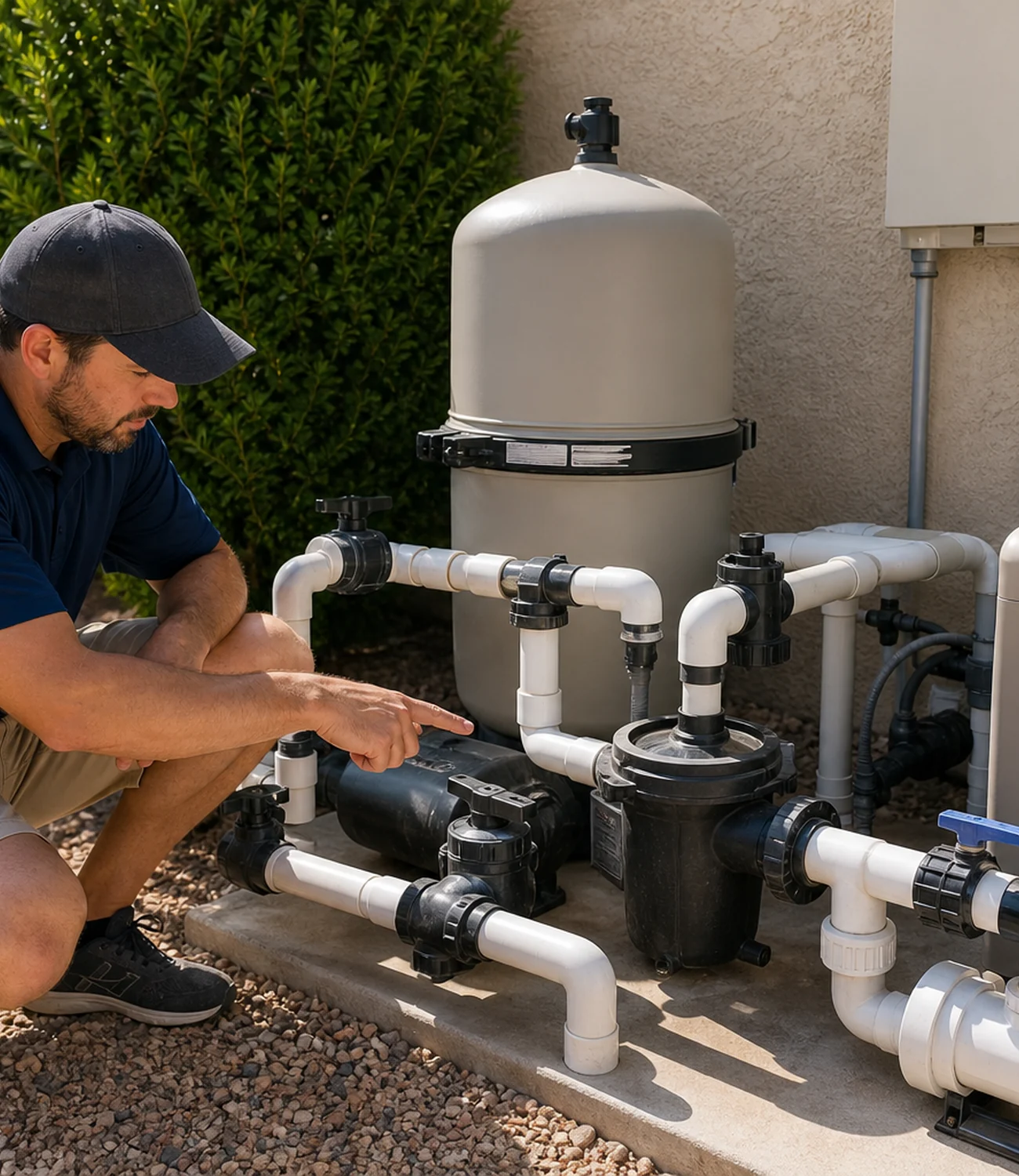
Diagnose the System, Not Just the Symptom
Pool equipment does not operate in isolation. Pumps, filters, valves, plumbing, heaters, automation, cleaners, and water conditions can affect one another, so the first visible symptom may not identify the component or condition that needs attention.
We trace how the symptom moves through the system instead of stopping at the first component that looks suspicious. That helps distinguish a failed part from a flow, control, cleaning, or water-condition problem affecting several pieces of equipment.
Weak circulation may involve the pump, a restricted filter, valve positions, air entering the system, accessible plumbing, or more than one connected condition. The pump itself is not always the only possible cause.
A heater or heat pump may not operate as expected when circulation is inadequate or controls are not communicating properly. The heating equipment and relevant connected conditions may both require evaluation.
A pool cleaner that moves slowly, stops, or works inconsistently may be affected by available flow, filter condition, valves, plumbing, or the cleaner system rather than one obvious component alone.
Unreliable schedules or unresponsive equipment may involve the automation panel, sensors, communication, wiring, or the pump, heater, valve actuator, or other equipment receiving the command.
Cloudy or changing water may be influenced by filtration or circulation, but physical cleaning and water chemistry can also contribute. Equipment repair alone may not address every condition affecting clarity.
The goal is a repair recommendation that matches the whole system. We explain the evidence behind it, any remaining uncertainty, and the available options before you approve any work.
Know When Repair Makes Sense—and When Replacement Does
Some pool equipment problems are worth repairing. Others make replacement the better long-term choice. We compare the failure, overall condition, repair history, parts availability, and the changes a replacement would require before explaining the reasonable options.
We do not default to repair or replacement. You receive a plain-language explanation of what each option solves, what else the system may need, and what you are approving.
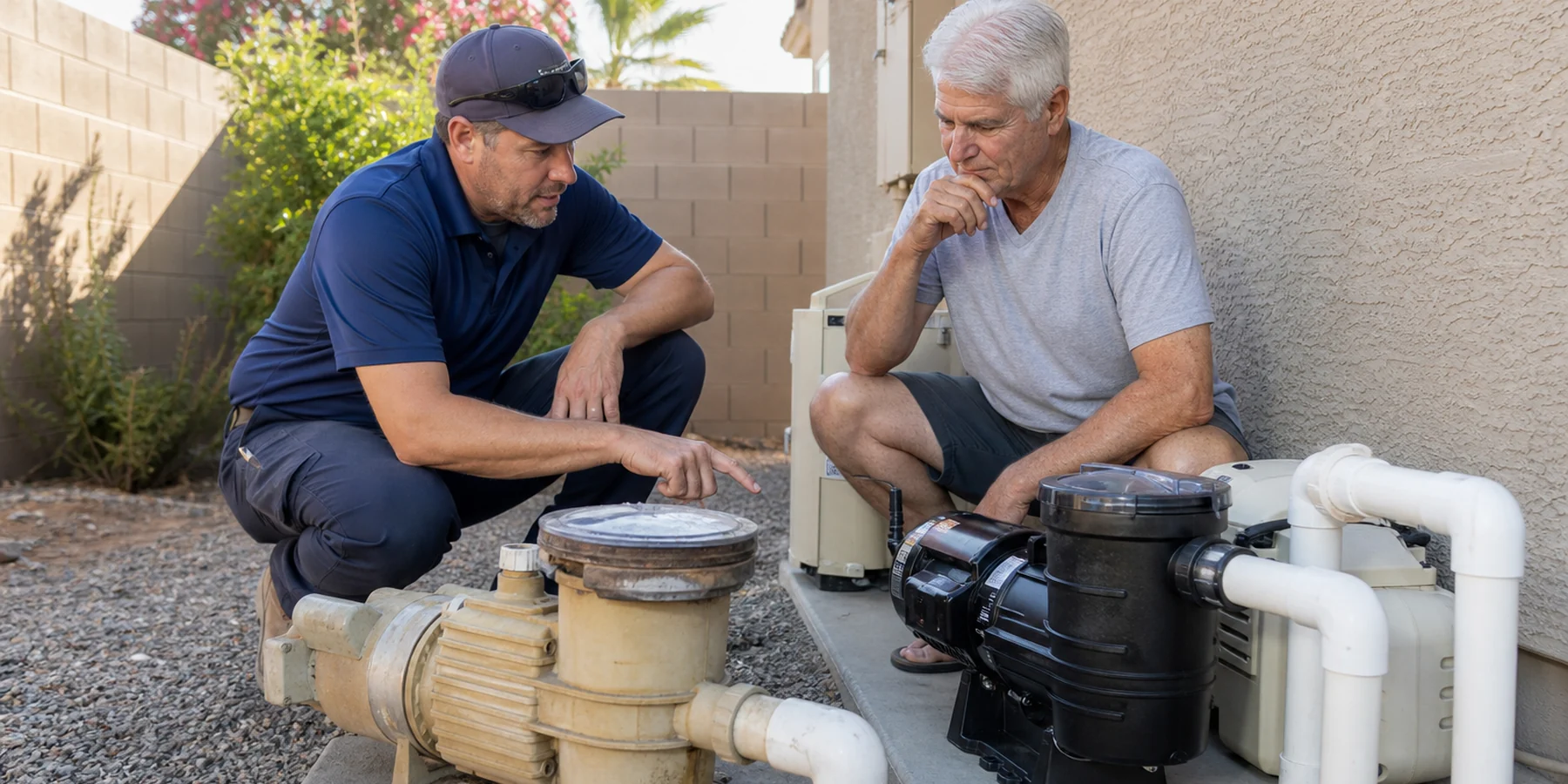
What we can observe and test helps show whether the failure is isolated, connected to another component, or likely to need additional troubleshooting.
Wear, corrosion, physical damage, and current performance help determine whether another repair is worthwhile or replacement deserves consideration.
A repair only makes sense when the correct parts are available and the completed work is reasonable for the equipment’s age and condition.
Repeated failures and previous repairs help show whether another repair is likely to provide enough value or whether replacement is the stronger option.
Any repaired or replacement component must work correctly with the existing plumbing, controls, flow requirements, and surrounding equipment.
We compare the expected reliability of the repair with the equipment’s current condition, recurring symptoms, and the complexity of the work.
A proper replacement may also require plumbing, valves, controls, programming, or equipment-pad changes so the new unit works correctly with the existing system.
We explain the repair and replacement options, answer your questions, and provide the work details for review. Nothing moves forward until you approve the option you want.
From Symptoms to an Approved Repair Plan
Your assessment starts with what you have noticed and continues with a hands-on check of the accessible equipment and connected circulation system. We explain the findings, answer your questions, and review the recommended work before anything is repaired or replaced.
Tell us the property address, equipment involved, what you can see or hear, and whether the problem is constant or intermittent. Photos can help us prepare for the visit.
We confirm that the property is within the service area, gather any needed equipment details, and arrange the onsite visit.
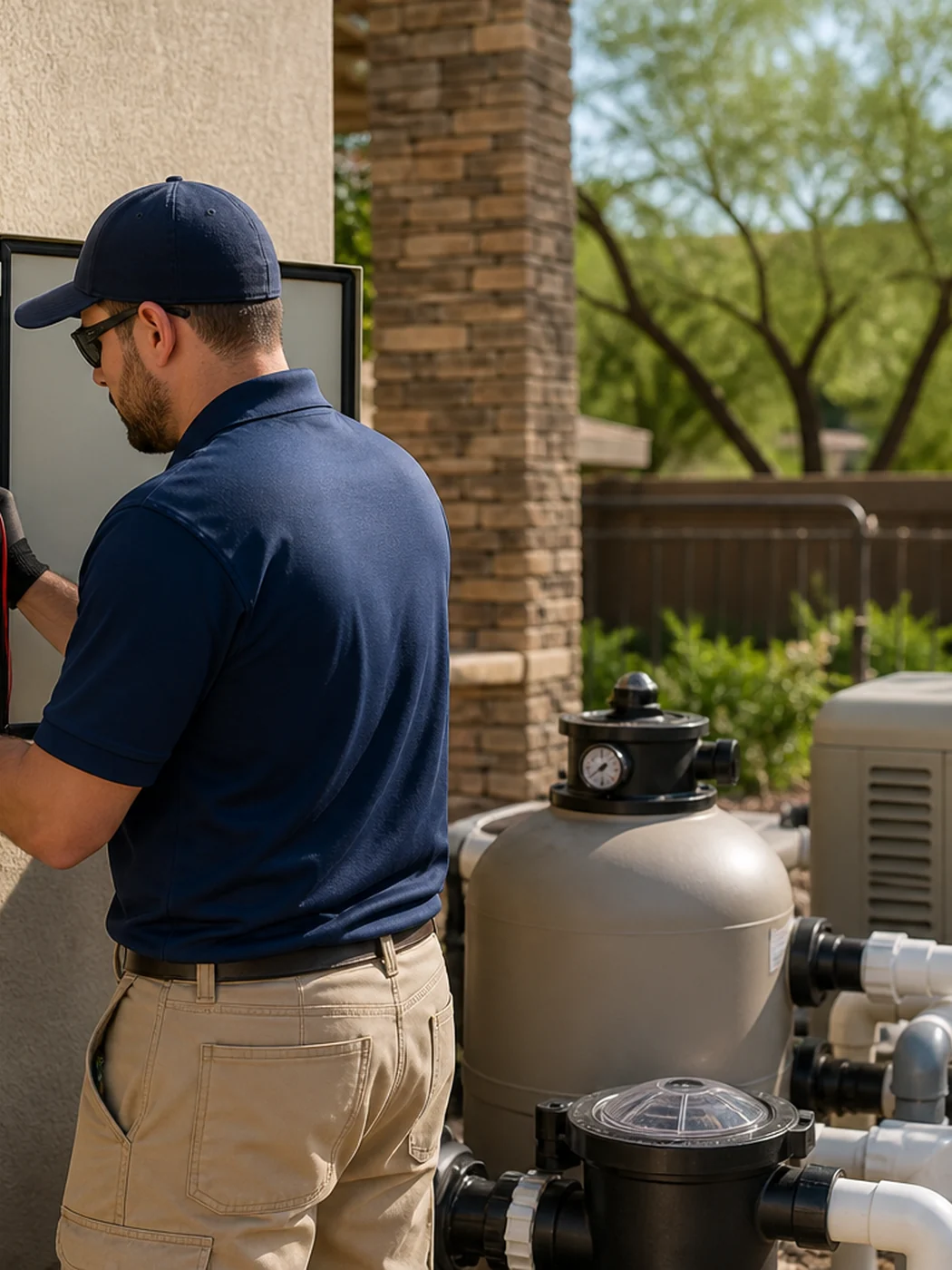
The technician inspects accessible equipment, exposed plumbing, valves, controls, and circulation conditions related to the reported symptom.
We show you what was observed, explain how the affected components may be connected, and answer questions about the likely cause.
You receive a clear recommendation for repair, additional testing, or replacement based on the equipment’s condition and the findings onsite.
Repair or replacement begins only after you review the recommendation and approve the work you want completed.
For safety, shut off equipment that is smoking, sparking, leaking heavily, or making severe grinding noises, and avoid opening electrical panels or pressurized filter housings.
From Weekly Observation to Repair Assessment
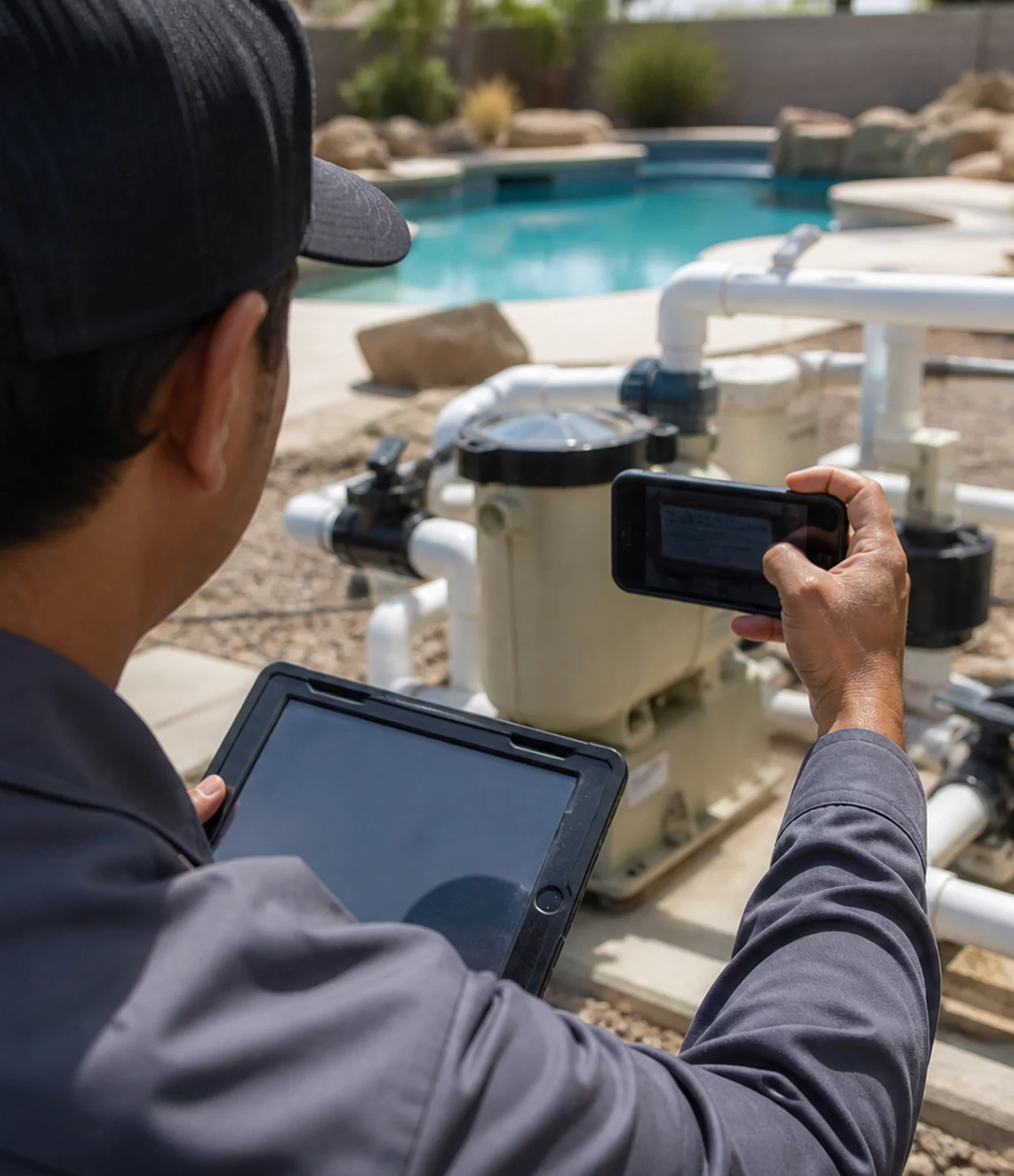
During weekly pool service, the technician watches for visible leaks, unusual noises, reduced flow, intermittent operation, and other noticeable changes around the equipment pad. When something stands out, it can be photographed, documented in the digital service report, and brought directly to your attention.
Weekly service can provide an early warning, but finding the cause may require a dedicated equipment assessment. That separate visit gives the technician time to troubleshoot the affected equipment, check connected components, and recommend the right next step.
Each weekly visit includes a look at accessible pumps, filters, exposed plumbing, circulation, and controls for noticeable changes in operation.
Visible leaks, unusual sounds, weak flow, or intermittent operation can be photographed and documented in your weekly service report.
If the technician notices a potential problem, the report explains what was observed so you can decide whether to schedule an equipment assessment.
A dedicated repair visit allows the technician to troubleshoot the affected equipment and check the connected system for contributing problems.
We explain the findings and recommended repair, testing, or replacement before any additional work begins.
Weekly reporting gives you an early heads-up when something does not look or sound right. A repair assessment determines the likely cause and gives you clear options before you approve the work.
Licensed Work from a Local Family-Owned Business
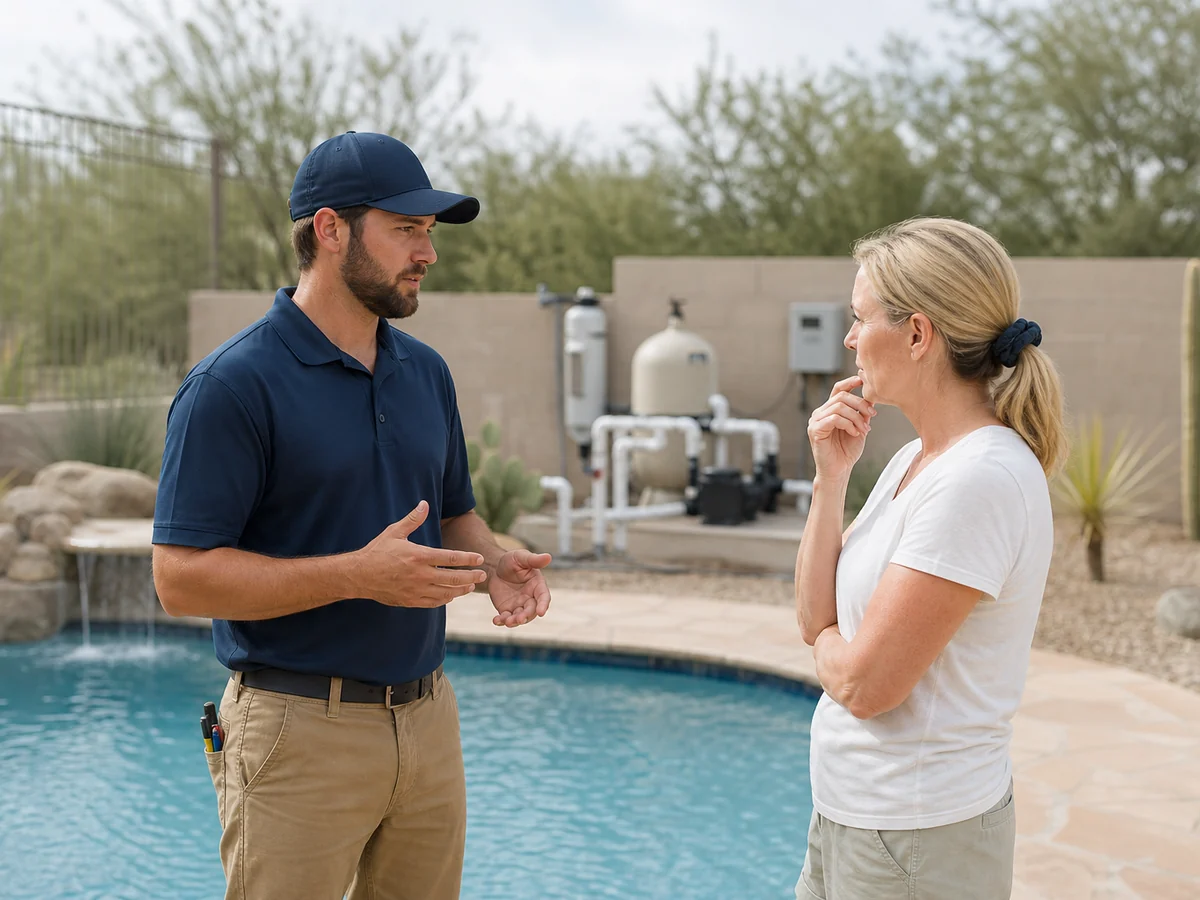
Clear Value Pools is a local family-owned business serving Scottsdale, Paradise Valley, Fountain Hills, Tempe, Gilbert, Chandler, and select Phoenix neighborhoods. Customers can call or text the local team directly about weak circulation, leaks, equipment noise, heating problems, or controls that stop responding.
Pool-equipment repair is performed under the company’s Arizona contractor license. Clear Value Pools also provides CPO-Certified weekly pool care, giving customers one accountable local company for routine maintenance and licensed equipment work.
Clear Value Pools is locally owned, and customers work with a team that is directly accountable for the service provided.
Call or text the local team to describe the symptoms, share photos, ask questions, and arrange the next step.
Pool-equipment, exposed plumbing, control, and circulation repairs are performed under the company’s Arizona contractor license.
Weekly maintenance and water care are supported by CPO certification, while repair work is performed under the company’s Arizona contractor license.
Service is focused on Scottsdale, Paradise Valley, Fountain Hills, Tempe, Gilbert, Chandler, and select Phoenix neighborhoods.
Share the property address and equipment concern so the team can confirm service and prepare for the assessment.
Tell us where the pool is located and what the equipment is doing. The local team will confirm service, gather any helpful details, and explain what to expect from the assessment.
Local Pool Care Across the Valley
Clear Value Pools provides weekly maintenance, water care, licensed equipment work, resurfacing, and remodeling across Scottsdale, Paradise Valley, Fountain Hills, Tempe, Gilbert, Chandler, and select Phoenix neighborhoods. Explore your local service-area page, then send your address so the local team can confirm service at your property.
Service availability can vary by address and project type. Call, text, or send your property address, and the local team will confirm coverage and talk through what your pool needs.
Residential and commercial pool service for Scottsdale properties dealing with intense sun, mineral-heavy water, dust, landscaping debris, and long swimming seasons. Services include documented weekly care, cleaning, water chemistry, licensed equipment work, resurfacing, and remodeling.
Explore Scottsdale Pool ServiceDetailed pool care for Paradise Valley properties that may include spas, automation, heaters, water features, and connected equipment systems. Clear Value Pools supports weekly maintenance, water care, licensed repairs, resurfacing, tile, deck work, and remodeling.
Explore Paradise Valley Pool ServiceWeekly service and broader pool support for Fountain Hills properties affected by strong sunlight, desert winds, mineral-heavy water, and hillside equipment layouts. Services include cleaning, chemistry care, licensed equipment work, resurfacing, and remodeling.
Explore Fountain Hills Pool ServiceResidential and commercial pool service for Tempe properties, with documented weekly care, cleaning, measured water chemistry, licensed equipment work, resurfacing, and remodeling support.
Explore Tempe Pool ServiceResidential and commercial pool care for Gilbert properties managing strong sun, seasonal dust, hard water, debris, equipment needs, and year-round maintenance demands.
Explore Gilbert Pool ServiceRecurring pool cleaning and maintenance, equipment repair, restoration, resurfacing, and remodeling for Chandler homes and commercial properties.
Explore Chandler Pool ServiceClear Value Pools serves select Phoenix neighborhoods with weekly care, direct local communication, cleaning, water chemistry, licensed repair and installation, resurfacing, and remodeling. Send your address to confirm service at your property.
View Pool Service for Select Phoenix NeighborhoodsClear Value Pools troubleshoots and repairs pumps, filters, heaters and heat pumps, automation and controls, salt systems, valves, exposed plumbing leaks, and circulation equipment. The onsite assessment identifies the affected components and whether repair, additional testing, or replacement makes the most sense.
Yes. We evaluate pump symptoms such as grinding, humming, overheating, failure to start, loss of prime, leaks, and weak or inconsistent flow. Because filters, valves, plumbing, controls, and air entering the system can produce similar symptoms, we check the connected circulation system before recommending a repair.
Yes. Clear Value Pools can assess existing pool equipment regardless of who installed it. We review the equipment’s condition, current operation, compatibility, and parts availability before explaining the available repair or replacement options. Explore Pool Equipment Installation.
We compare the failure, equipment age and condition, repair history, parts availability, connected-system requirements, and the work a replacement would require. You receive a clear explanation of both options before deciding how to proceed. Explore Pool Equipment Installation.
No. Pool repair can be requested as a separate service. Weekly customers may first learn about a visible concern through their digital service report, but customers do not need an ongoing maintenance plan to request an equipment assessment. Learn About Weekly Pool Maintenance.
Call, text, or submit the assessment form with the property address, equipment involved, and symptoms you have noticed. Clear Value Pools will confirm service for properties in Scottsdale, Paradise Valley, Fountain Hills, Tempe, Gilbert, Chandler, and select Phoenix neighborhoods. View Pool Repair Service Areas, then Sign Up Now.
Tell Us What the Equipment Is Doing
Tell Clear Value Pools what you are seeing or hearing, which equipment seems affected, and where the property is located. The local team will review the details, confirm service for the address, and help arrange the assessment.
Photos, equipment model information, and notes about when the problem occurs can help the technician prepare. During the onsite visit, you will receive a clear explanation of the findings and the repair or replacement options before approving any work.
Serving customers in Scottsdale, Paradise Valley, Fountain Hills, Tempe, Gilbert, Chandler, and select Phoenix neighborhoods.